Michelle G Brown | Mixed Media Art

Mixed Media Artist ~ Linda Giese

.

Our Mixed Media Art community is a diverse bunch; from all around the world, with different interests, reasons why we create and a wide range of skills. Over the next few weeks we will be featuring a range of mixed media artists to tell their stories and share their artwork.

Linda Giese is our featured artist this week and we’ll let her tell us about herself…

~*~*~*~*~*~*~*~*~*~*~*~*~*~*~*~*~*~*~*~*~*~*~

I’m Linda Giese.  I live in El Cajon, California, USA.  I’m married with 2 kids and 3 terrific grandkids.  My charmed life consists of tennis and Curves for my body, bridge for my mind and art for my soul.  Of course family trumps all.  I was published for the first time in Art Journaling magazine, Winter 2011 issue. I was beyond thrilled. I teach privately..art of course…and that is my passion.  I want everyone to have as much fun as I do.

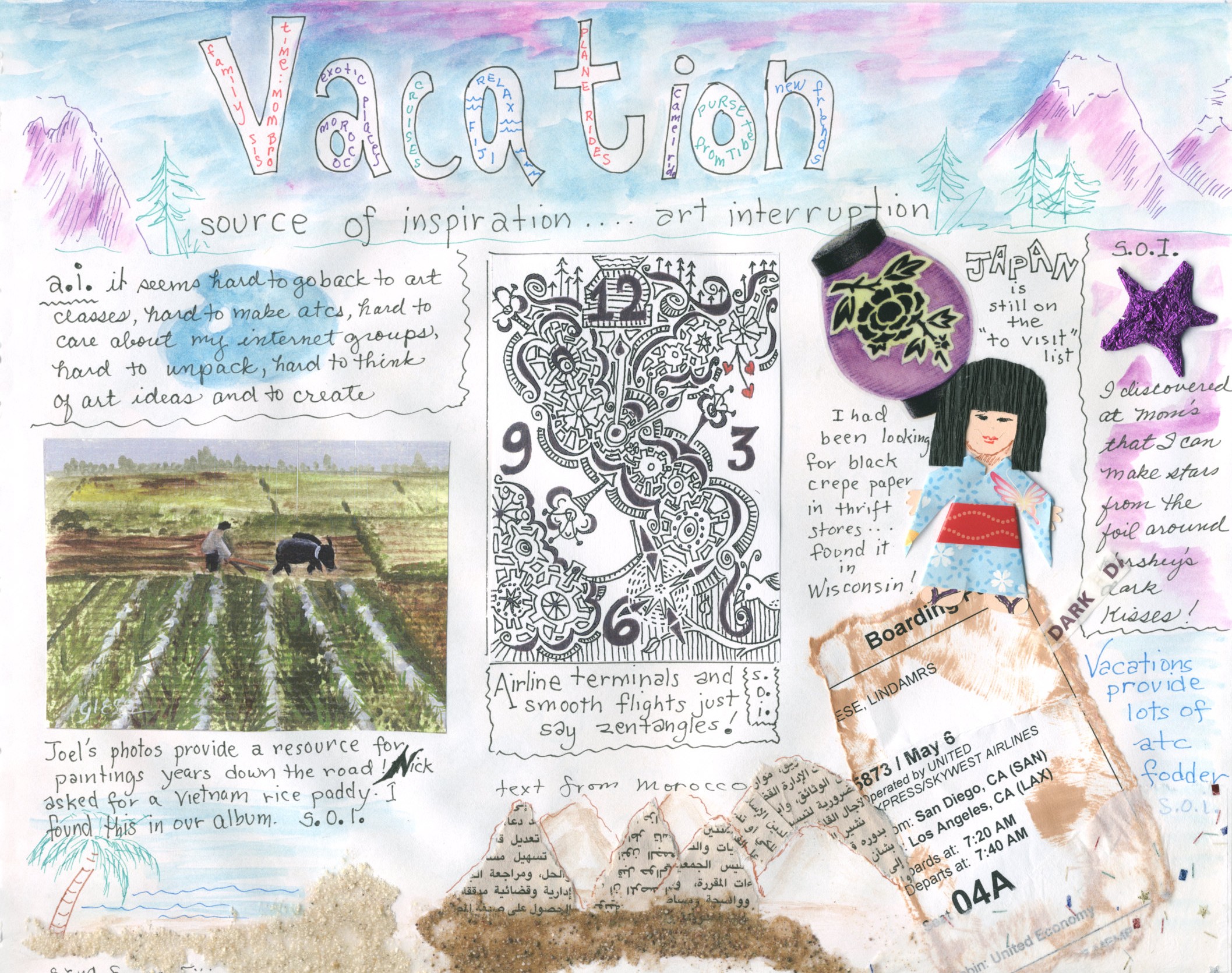
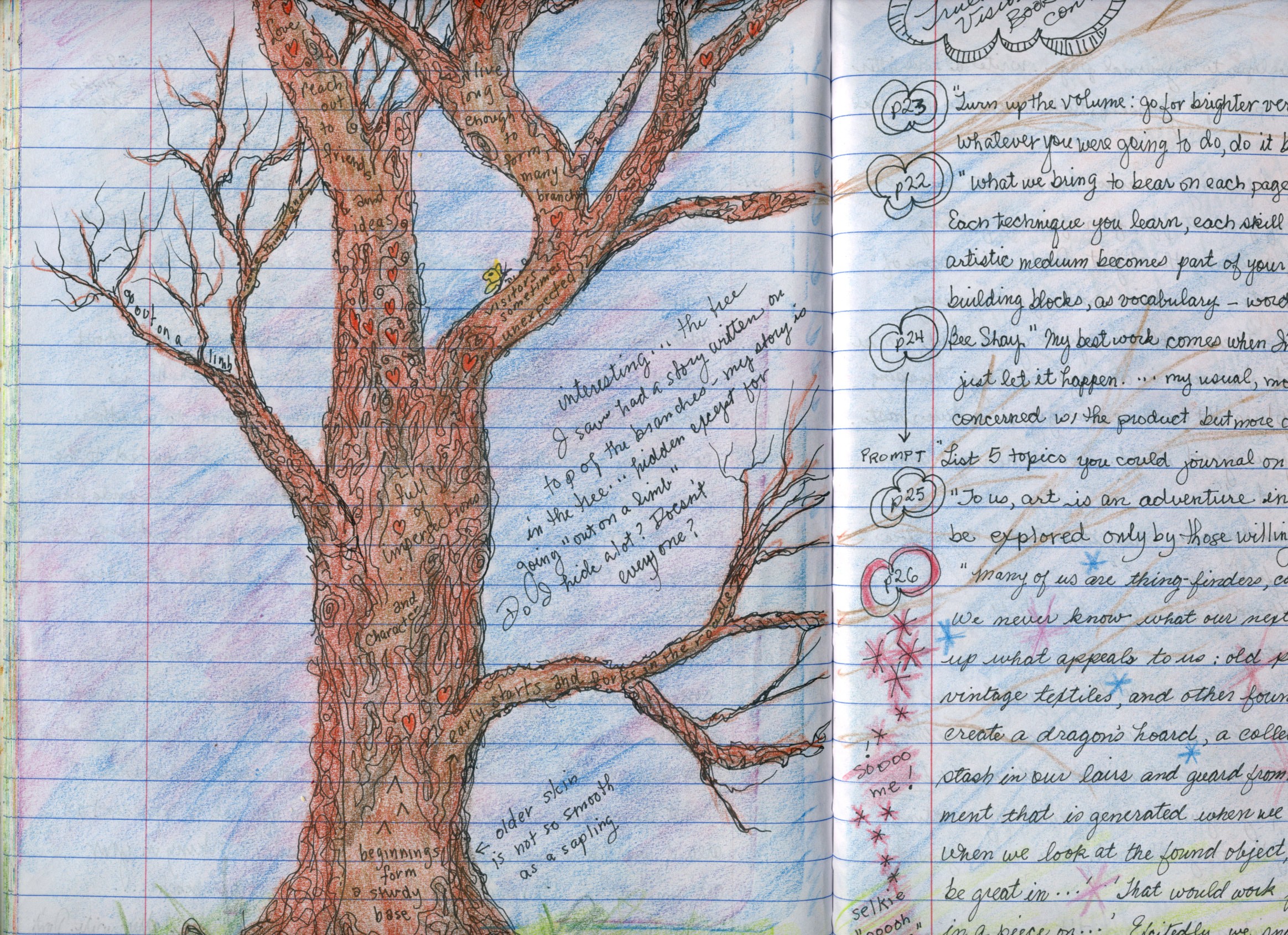
I’ve included some journal pages and one canvas of a violinist.  I approach the canvas in much the same way as a journal page.  I often include napkins and tissue adhered with mod podge.  I often include foreign text. I am in the midst of 15 journals. Each seems to serve a different purpose. Small sketchbooks for travel and on the go sketches, big sketch books for bigger ideas, altered books for interesting ideas and page spreads that are more finished works of art like the canvas’, and small sketchbooks for small ideas.  I have an altered book for techniques, and a big sketchbook for zentangles. I also have 3 notebooks including a junque journal.

I don’t have a blog, but love to answer any art questions. Here comes that teacher in me..hehehe.

Love and hugs,

Linda

~*~*~*~*~*~*~*~*~*~*~*~*~*~*~*~*~*~*~*~*~*~*~

Violinist on Canvas
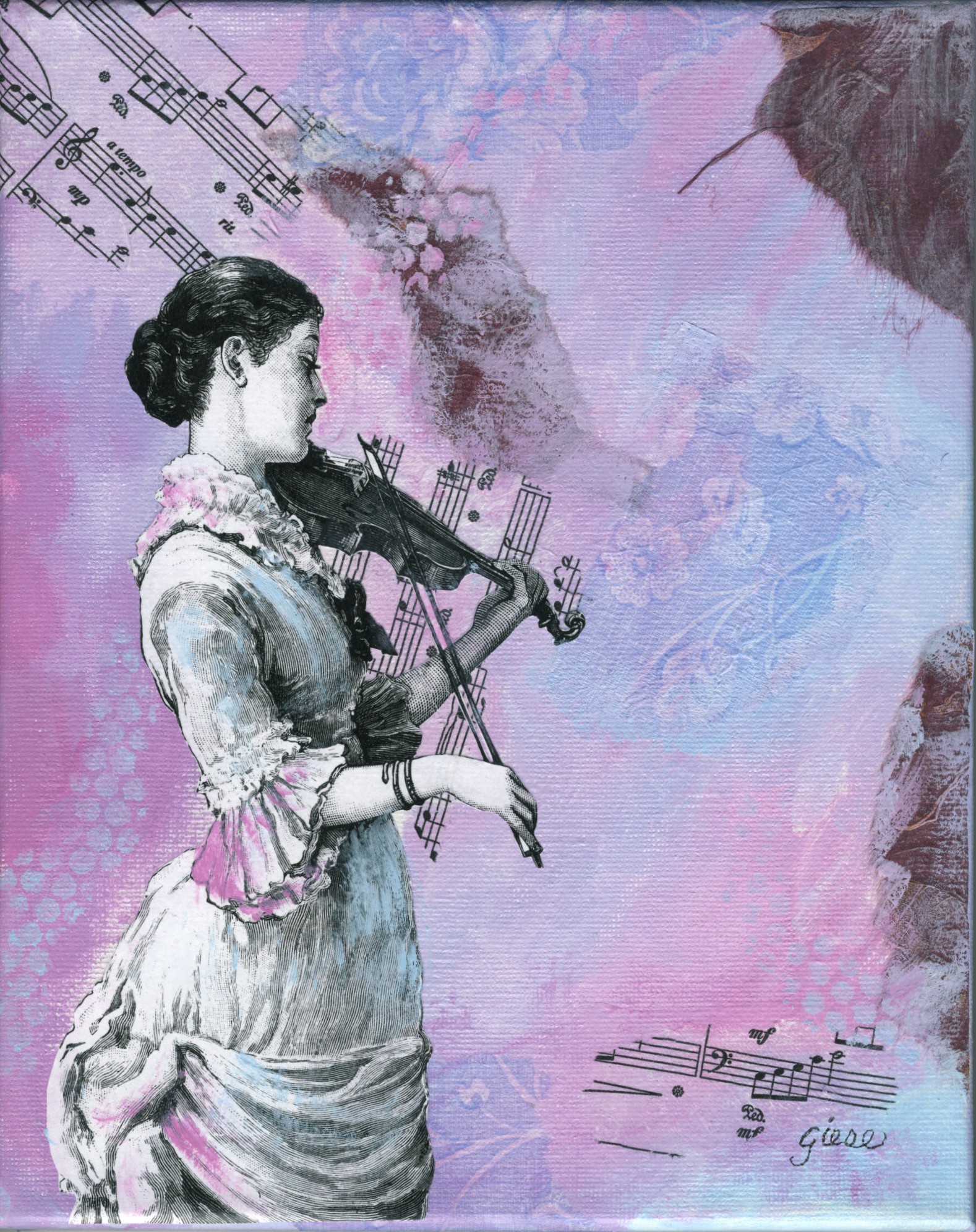
Violinist on canvas

~*~*~*~*~*~*~*~*~*~*~*~*~*~*~*~*~*~*~*~*~*~*~

Journal Layouts
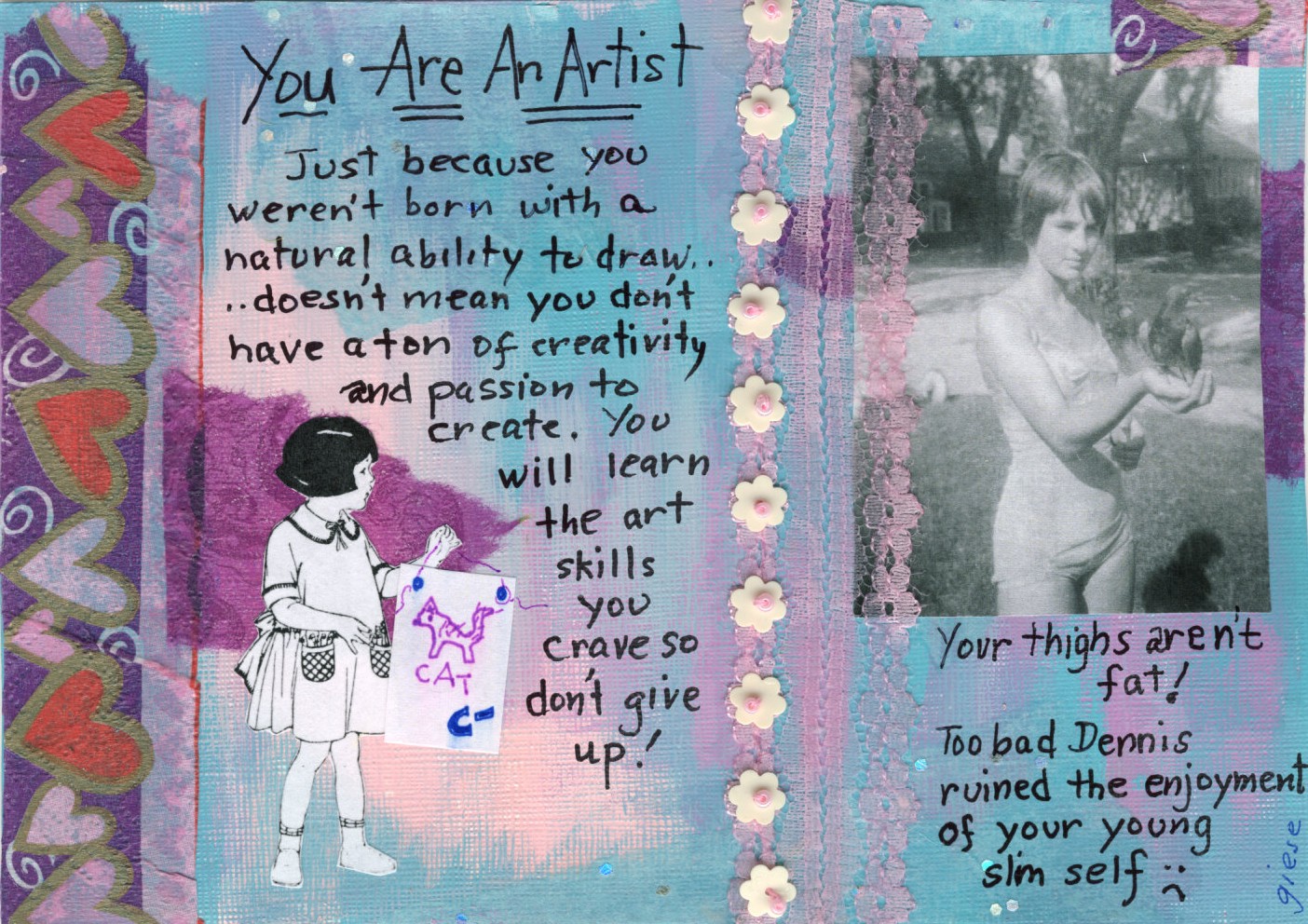
Mixed Media Journal

Mixed Media Journal

Mixed Media Journal

~*~*~*~*~*~*~*~*~*~*~*~*~*~*~*~*~*~*~*~*~*~*~

Thanks for sharing your layouts and gorgeous canvas with us, Linda.

.

.
 

Jewellery Skills ~ Jump Rings

Jump rings are those round metal findings that are used to connect all sorts of elements together in your mixed media artwork and jewellery projects. They come in a huge variety of colours and sizes.

The key to using jump rings is how to open them; the skills for using a jump ring are easily learnt and make your life much easier when adding jewellery elements to your work.

~*~*~*~*~*~*~*~*~*~*~*~*~*~*~*~*~*~*~*~*~*~*~*~*~*~*~

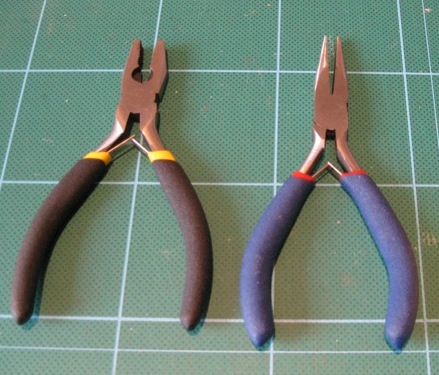
1. To easily open, insert and close jump rings, we need both flat nosed pliers and pointy nosed pliers.
mixed media jewellery elements

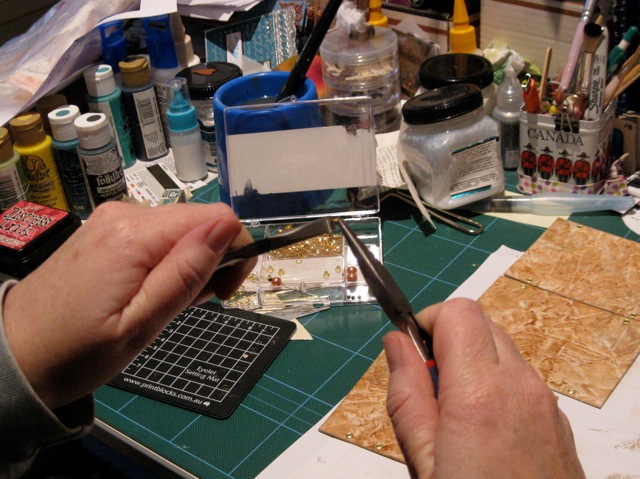
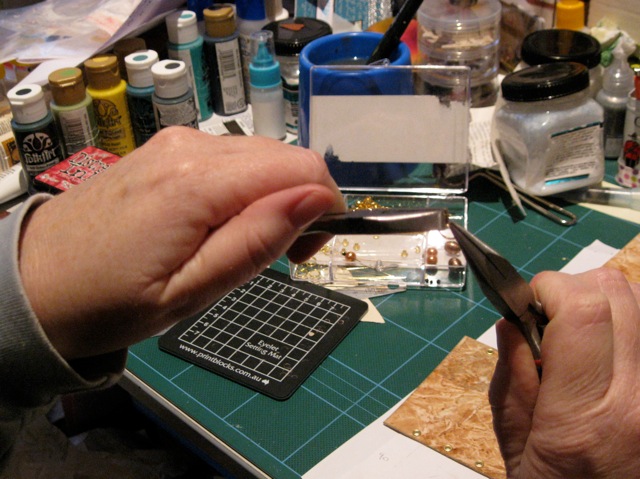
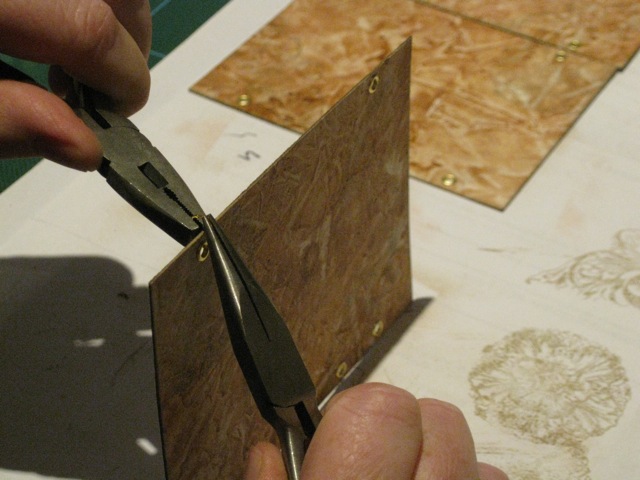
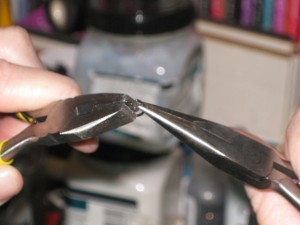
2. Hold jump ring with flat nosed pliers, with split close to end on pliers
mixed media jewelleryUse pointy nose pliers to hold other side of ring. Look closely; the ring tends to already be slightly open, to one side. Twist ring open in this direction.
mixed media jewelry
We are opening the ring with a sideways motion; NOT opening up the ring – it must be sideways; this gives us the best chance to being able to close the ring again and not deform the ring out of shape.

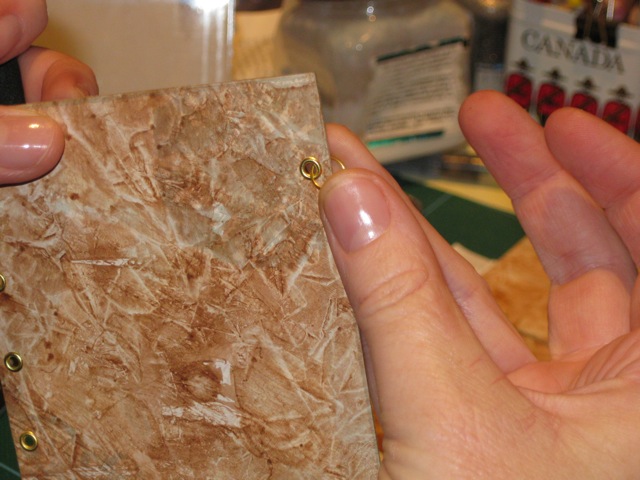
3. Now ring is open, you can thread it through eyelet.
mixed media jewelry

4. To close the jump ring, take hold with flat nosed pliers again. Use the pointy nosed pliers to bend the ring back the way it came. You may need to over bend the ring to allow for the springback in the metal. Check the ring; if is still isn’t closed, bend a little further and check again.
mixed media jewelry

I hope this helps you to get started with playing with jump rings and jewellery elements. We will be featuring a project soon that will bring together all you have learnt about using jewellery elements in your mixed media art.

Happy creating!

.

.

.

Jewellery Tools – Pliers and Wire Cutters

.
When I first started adding jewellery elements into my mixed media art, I really felt like I had started on a whole new journey; new terminology, new tools, new shiny metal things and wonderfully, wonderfully coloured beads, of all shapes and sizes.  Once I overcame the excitement and looked at what I really needed, it came down to three basic tools.

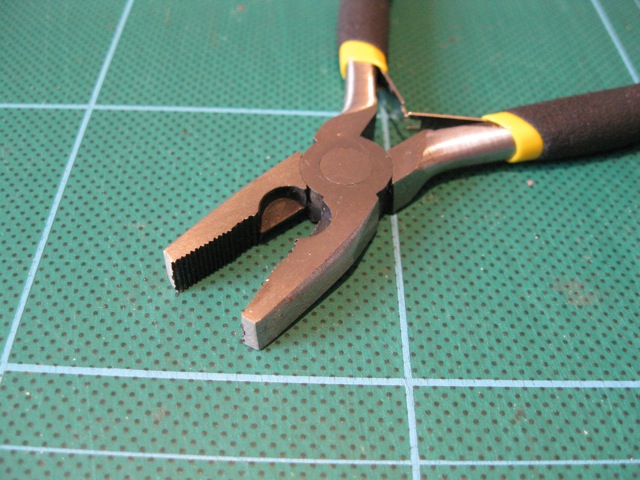
Flat nosed pliers
Flat nose pliers are needed for holding the metal bits while manipulating them with the pointy nosed pliers. The flat nose have a good surface area to firmly hold jump rings and other fiddly bits.

mixed media art jewellery elements

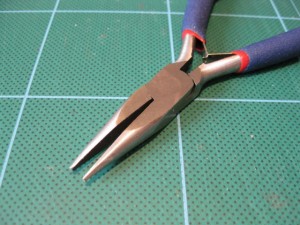
Pointy nosed pliers
The pointy nosed pliers are used for bending and twisting the metal bits while they are being held by the flat nosed pliers. The pointy noses makes it easier to hold the small area of the metal element and move or bend it. The rounded end is also good for making loops in wire and pins.

mixed media art jewellery elements

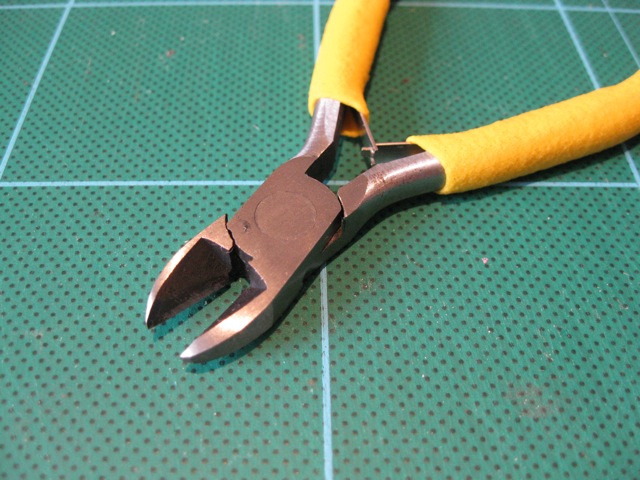
Wire cutters
For a while I refused to buy wire cutters as I thought the cutting section on the flat nosed pliers would be sufficient. I soon discovers that the wire cutters on the pliers aren’t as sharp as proper wire cutters and tended to squash the wire, rather than cut cleanly. Using wire cutters makes cutting wire and chain simpler and gives a nicer finish.

mixed media art jewellery elements

~*~*~*~*~*~*~*~*~*~*~*~*~*~*~*~*~*~*~*~*~*~*~*~*~*~*~*~*~*~*~

Using the two types of pliers together makes opening and attaching jump rings an easy process. In our next article we will look at the basic jewellery skills we need to add jewellery elements to our mixed media art.

mixed media art jewellery elements

*~*~*~*~*~*~*~*~*~*~*~*~*~*~*~*~*~*~*~*~*~*~*~*~*~*~*~*~*~*~

Hope you are enjoying our series on adding jewellery elements to our mixed media art.

Happy creating!

.

Mixed Media Artist ~ Carmen Sanchez

~ * ~

Our Mixed Media Art community is a diverse bunch; from all around the world, with different interests, reasons why we create and a wide range of skills.  Over the next few weeks we will be featuring a range of mixed media artists to tell their stories and share their artwork.

This week we are heading to Madrid to see what Carmen (aka Cuchy) is doing with her mixed media art.

~*~*~*~*~*~*~*~*~*~*~*~*~*~*~*~*~*~*~*~*~*~*~

M. Carmen, from Madrid (Spain), is also known as Cuchy across the web.  She is 42 years old, has been married for almost 20 years and has 2 children (15 and 7) who also like the crafty side of life  As far as she can remember, Carmen has always been interested in any kind of arts and crafts.

“Mainly self-taught, I do not miss the chance to attend as many workshops, either online or on-site I can, being always in ongoing training”, Carmen says. “My works have evolved from “clean and simple” to mixed media layers and layers. I love to try, experiment and learn new techniques with paint, papers, textures and everything within reach.”

As a contributor and guest designer in various Spanish and international blogs, Carmen has taught several workshops in Madrid and Barcelona and loves to teach from her own experiences, and encourage the students to think outside the box and put their inner self in everything they create, to achieve a personal and unique result.

Carmen tries to balance her family life and work with mixed media, scrapbooking, music and her blog [http://la-almohada.blogspot.com], where you can see her latest projects.  In addition to all of this, Carmen also hosts an online crop every other Friday while chatting with some of her crafty friends.

~*~*~*~*~*~*~*~*~*~*~*~*~*~*~*~*~*~*~*~*~*~*~

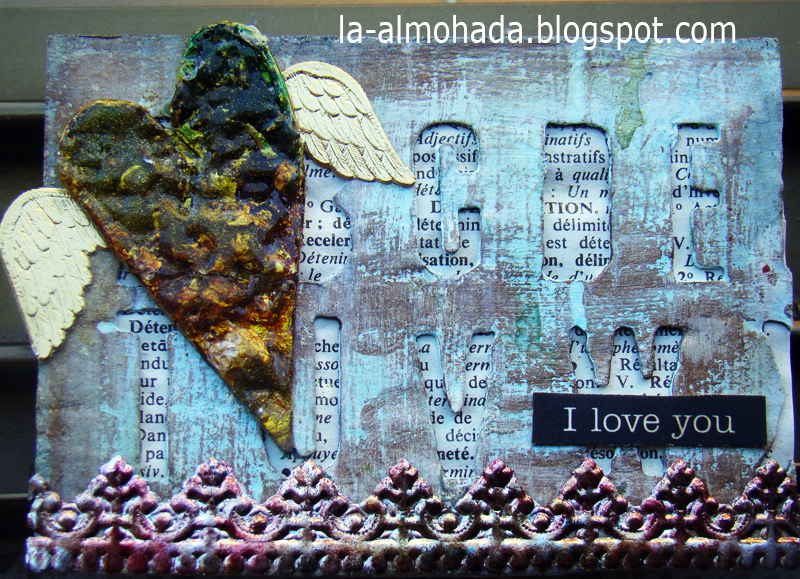
Carmen has included one of her latest ATCs to show us.

Mixed Media artist trading card

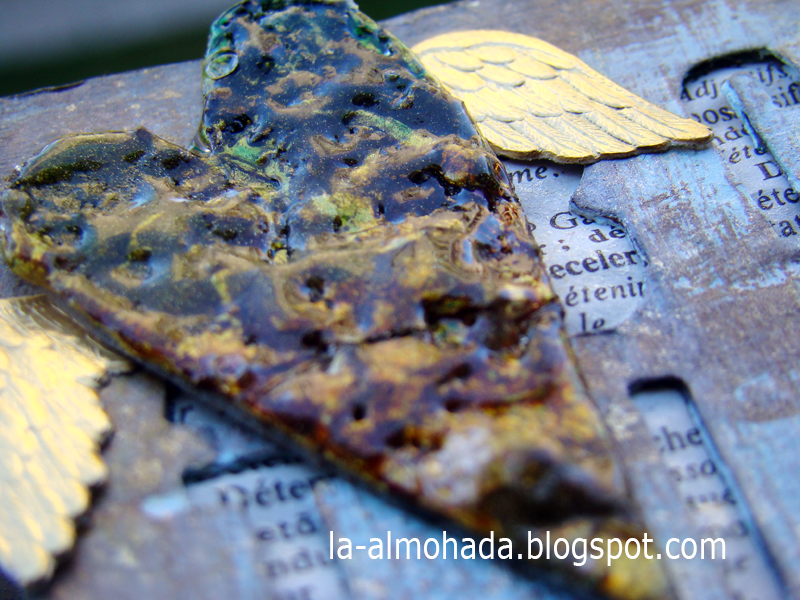
It’s a grungeboard piece which she painted with acrylics and crackle paints. To achieve that grungy and rusty look on the heart, Carmen used the heat gun until the paint made bubbles. To finish it, a layer of clear UTEE was added.  The background of the ATC is a “negative” cardboard piece from an alphabet die cut. It’s misted with glimmer, distress inks and has a piece of dictionary paper on the back that shows through the “empty letters”.

Mixed Media art heart

The border is a piece of german scrap coloured with alcohol inks.

~*~*~*~*~*~*~*~*~*~*~*~*~*~*~*~*~*~*~*~*~*~*~

Thank you so much for sharing your story and your wonderful ATC with us, Carmen.

.

.

.