MMAT02 – Credit Card Painting Technique

Mixed Media Art Technique 02 was all about credit card painting and here is what I did
with the completed background.

As I wanted to credit card painting and the brilliant colours to show through, I chose to decorate
the background with simple stamping, using black ink. My preference is to use
Brilliance Ink in Graphite Black for this project as it is a juicy inkpad, which is good for the more
solid designs and also because it will dry on most surfaces. As I has a thin coating of metallic gold
paint as the top layer, I needed to use an ink that would dry on the non-porous surface. I chose a
paisley design with stamps by See-Ds and used different sizes to cover my background.

Once dry, I cut up the sheet to make a simple birthday card, an ATC and mini handmade book covers (still to be turned into a book) And I have still got a little left over. Image on ATC from Art-e-zine - my favourite place to go for vintage images.

I hope this inspires you to get creating.

~*~*~*~*~*~*~*~*~*~*~*~*~*~*~*~*~*~*~*~*~*~*~*~*~*~*~*~*~*~*~*~*~*~*~*~
Get your own copy of the Credit Card Painting Technique sheet for
99 cents
and get started on your Christmas card backgrounds NOW!
** use discount code Homemade at the checkout **

Mixed Media Art Techniques

Get your NOW!

The credit card painting technique is great for getting colour onto lots of paper fairly quickly,
which makes it an ideal technique for large swaps or large journal pages.

~*~*~*~*~*~*~*~*~*~*~*~*~*~*~*~*~*~*~*~*~*~*~*~*~*~*~*~*~*~*~*~*~*~*~*

Happy Creating!

.

.

~*~*~*~*~*~*~*~*~*~*~*~*~*~*~*~*~*~*~*~*~*~*~*~*~*~*~*~*~*~*~*~*~*~*~*

Technorati Tags: , , , , ,

Mixed Media Art Techniques 01 Painted Background

We hope you have as much fun with this background technique as we did. Here is the final background:

Pink and Purple background by Michelle Brown

We would also love to see your work – the backgrounds you have created with this technique and the work you have made using the background sheet as a starting point. Leave a comment below and a link to your blog, showing us your artwork. Please make sure you point us to your post with the artwork, not just your blog in general.

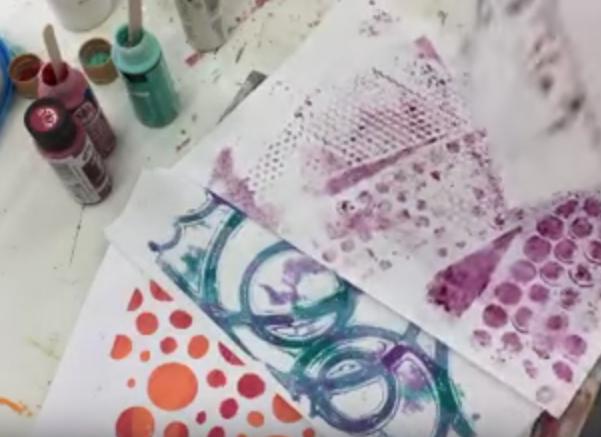
Adding the pink paint to the painted backgroundTexture the paint using an old toothbrushUsing a dry brush apply purple paint over stencil

If you want your own copy of this technique sheet, it is now available tor immediate download!

$2.97

Add to Cart

Here we create a simple background with many layers to add texture and visual interest to our Mixed Media Art piece, even before adding the collage elements. These techniques can be used with different colours to create all sorts of backgrounds.

My final mixed media piece;

pink and purple background mixed media collage

So get creating!

Technorati Tags: ,

Gesso Resistance Background

This stunning background was created using the gesso resistance technique, as introduced to me by Michelle Ward, over with her Green Pepper Press Street Team.

Background using gesso resistance technique

Background using gesso resistance technique

Start by gesso’ing a layout. I use a criss-cross pattern, which gives the layout some texture to start with, as the brushstrokes will show up as the piece progresses. Allow to completely dry.

Gesso Layer

Next, splozzle some acrylic paints around. While it’s still a little damp, drag a dry credit card across the surface to remove some of the colour. The gesso allows the paint to be easily removed.

Paint SplozzlingPaint removal

Also spritz some water onto the page and let sit for a minute. Then use paper towl to blot off the water and remove some of the paint. A nice splattering effect is created.

Water Spritz

Now you’ve got a background, ready for your next mixed media art project.

Finished background

Happy creating!

.

 Mixed Media Backgrounds with the Credit Card Painting Technique

Creating your own backgrounds is an exciting part of any mixed media art project. While there are many commercially available papers and products out there, creating your own background from scratch is a great way to ensure no one else will have a project looking like yours.Making your own backgrounds also allows you to tune the colours to match your theme.

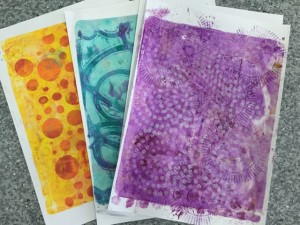
Credit card painting backgrounds

Credit card painting backgrounds

Background papers can be made in a variety of ways. Today will concentrate on using the credit card painting technique. I’m not sure who created this technique, but the likes of Lisa Vollrath and others have all added to my knowledge and inspired me to give it a go.

The materials we need are items you will have around the house; base paper(mine has text on it from an old conference papers book), two different coloured paints, one metallic paint and an OLD credit card or store card or any other small, flexible plastic card. I read somewhere that using your real credit card with the paints will wreck the magnetic strip on the back, so please do not use your current card! We will also need some backing newsprint or plastic, to protect our working surface from the paint.

The credit card painting technique can create lots of backgrounds in a short space of time, so be prepared with extra text paper and somewhere to put them flat to dry, before you begin to get dirty. Lay out your work surface and place the text sheets on top.Give the paints a good shake and apply a line of the first of the two paints, directly onto the top of the page. Hold the top of the page with one hand and use the credit card in the other. Hold it angled towards you and carefully drag in down the length of the page. When you’ve reached the bottom of the text page, lift the credit card and move across the the next bit of paint. Again, angle it towards you and carefully drag in down the length of the page, going parallel to the first strip on paint. Continue until you’ve covered the text page or run out of paint. Sit aside this first paint layer to dry. Move onto the next sheet, with the same paint.

As you experiment with the mixed media technique, you will find different paints have different runniness (or viscosity) and this will vary how well it spreads down the page.Also the different in angles the credit card is held will change the effect that is created. These are the fun aspects of this technique as each attempt produces a slightly different result.

Once the first layer of paint is dry it is time to repeat the process with the second colour or shade. Depending on how different the two colours are will alter the results. If the second colour is a lot darker than the first, then I often apply it sparingly, so the colour comes out patchy,rather than having the second colour obscuring all of the first colour.  Once more, give the paint a good shake and apply a line of the paint directly across the top of the page. Hold the paper with one hand and use the credit card in the other. Hold it angled towards you and carefully drag in down the length of the page, then move across the the next bit of paint.  Drag the card down the length of the page, going parallel to the first strip on paint. Sit aside to dry.

The third, metallic layer of this technique is often what bring this background to life.Spot the gold or silver or bronze paint across the top of the page and lightly drag the credit card down the page. The metallic paint brings a sparkle to the painted paper that adds a wonderful finishing touch.

So that’s the basics for creating a mixed media background using the credit card painting technique. Feel free to experiment with different paint and paper combinations to see what wonderful creations you can make. You can even elaborate on these painted sheets by adding some stamping, or adhering them straight on to your next mixed media art project.

Happy creating!

Technorati Tags: , , ,