Welcome to Mixed Media Arts

June 29th, 2010 by MMA_Team

We hope you are ready to continue your creative journey and are looking for ideas and inspiration.  We aim to cater for all levels of experience.

We cover a multitude of Mixed Media Art topics:
- Mixed Media Techniques
- Mixed Media Collage
- Mixed Media Painting
- Art Journals
- Altered Art
- Altered Books

Across the top of the page, you can find the Projects shortcut and the Resources, Tips and Hints page, as well as our Mixed Media Journal.

To the right, you can find the Topics.

You can also join our Mailing List to receive exclusive technique tips and free background sheets.

Have a look around and feed your inner muse -- you never know when inspiration will hit. And please remember; anyone can create!

Happy Creating!

Mixed Media Art Team


Technorati Tags: , , ,

What is Mixed Media Art?

November 24th, 2009 by MMA_Team

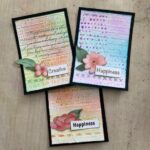
The term “mixed media art” is a broad definition that covers many arts and crafts, including collage, assemblage (both 2D and 3D), altered objects, including books and boxes, handmade greeting cards, artist trading cards (ATCs) and tags, art journalling and book making.
Hanging Art

Hanging Art

The “mixed media” used includes paints, papers and board of all descriptions, glues, buttons, fabrics, found objects, photos, metal bits, fibres, things from nature, inks, pencils, crayons, markers, pastels and polymer clays, to name a few.


What materials do I need to get started?

The beauty of mixed media art is the flexibility to start with things around you and expend from there. To get started you need a substrate or base. This could be a clean sheet of paper, sketchbook, a cereal box or anything else that may be sitting still.  Then, if you are heading down the collage path, you’ll need something to stick with (glue sticks are fine to begin with) and something to stick on (coloured papers, newspapers, catalogues, and anything else that grabs you).

If you are heading down the drawing / painting path, then once you have your substrate, you’ll need something to make a mark, whether its pencils, paints, crayons, markers or pastels.

Any or all of these are all you need to get started. Just use the things you have around you

What skills do I need to get started?

Another attractive feature of Mixed Media Art is that you don’t need fine art or drawing skills. That doesn’t mean you are excluded from mixed media art if you do have these skills, but it opens up a world of creativity for the rest of us who like to make things but “Can’t draw”.

The skills you need to get started are as simple as being able to use a pencil, scissors and glue. These skills will expand and develop with practice, depending on which “branch” you follow.  More complicated skills of mixing paints and developing your “artist eye” will happen as you expand your own creativity. Specific skills for particular media or art types will present themselves as you move into these areas. As with many things in life, the techniques and teachers will appear when you are ready.

Technorati Tags: ,

Serendipity Technique

August 20th, 2010 by MMA_Team

The Serendipity Technique is easily mastered and is lots of fun. The only problem I have is deciding how small a piece is too small to throw out, because this techniques will use all of your small and left over pieces. How your initial collage goes together is not an important part of this technique; it is the cutting and then rearranging of each square that adds the charm to each piece.

1. Collect together a background sheet (this one is pre-painted in red, left over from doing the credit card technique) and similar colour scraps.

Mixed media art scraps

2. Tear them into interesting shapes and glue onto the background. I used a glue stick.

3. Stamp shapes onto the collage background


4. Cut collage into strips. To make this simple, use the ruler width or lines on the cutting mat to cut them, rather than measuring the strips too accurately. Take care if using a paper cutter if your collage is thick in places, as it may damage your cutter.

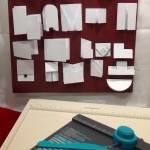
5. Cut strips into squares, again using the ruler width or lines onto cutting mat to cut them at the same spacing. You will have lots of colourful squares.


6. Now you can turn all of these squares into cards or add them onto other forms of mixed media art. Some of these were edged with black ink or layered onto darker card to highlight the squares.

Like any of these techniques, have a play round with them – cut bigger squares or smaller squares, use your kids artwork or turn a background you don’t like into an entirely new piece of art.

Happy creating!

~*~*~*~*~*~*~*~*~*~*~*~*~*~*~*~*~*~*~*~*~*~*~*

.

.

Technorati Tags: , ,

Family Capers has showcased two articles by Michelle:

Making Christmas Cards with the kids

Dispelling the “I can’t do it” Myths of Creativity

Come and have a look!

~*~*~*~*~*~*~*~*~*~*~*~*~*~*~*~*~*~*~*~*~*~*~*~*~*~*

Family Capers is an interactive and supportive community network, promoting fun and encouraging social aspects for you and your family. We are all about getting the most from family life and offering support the families in our community.

~*~*~*~*~*~*~*~*~*~*~*~*~*~*~*~*~*~*~*~*~*~*~*~*~*~*

.

Technorati Tags: ,

Australian Money Saving Tips

Mixed Media Art is brought by Wordpress Themes
Entries (RSS) and Comments (RSS).

Hide me
Mixed Media Art inspiration delivered directly to your Inbox!
Name Email
Show me
Close